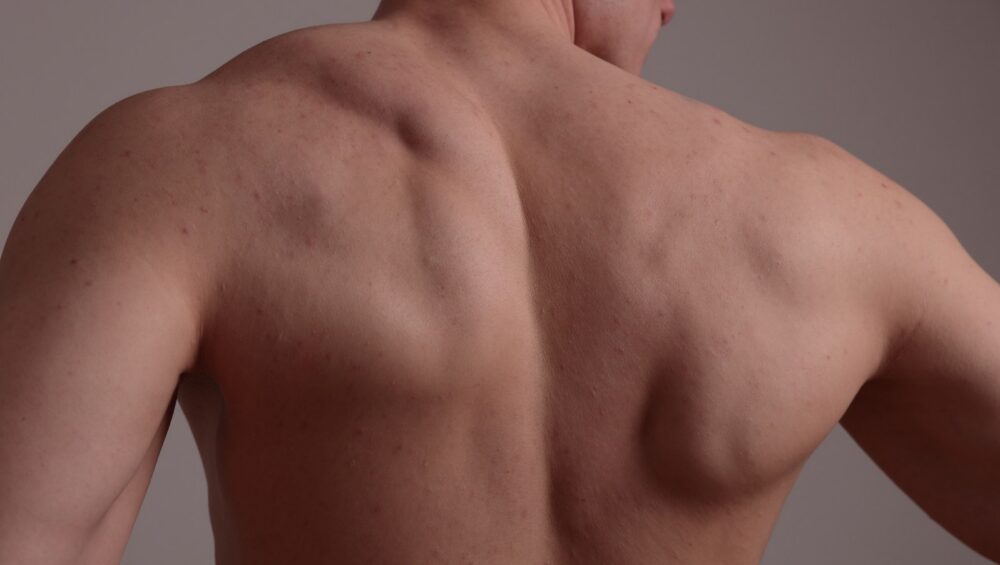
Acne is one of the most common side effects of androgen use and one of the least talked about. It is also one of the most predictable, because the mechanism behind it is well understood. Androgens tell the skin to make more oil, and more oil in the wrong places leads to breakouts.
Here is how that works, why it tends to show up on the back and shoulders, and why some compounds are worse for it than others.
Androgens and Oil Glands
The skin contains sebaceous glands, small glands attached to hair follicles that produce sebum, the oily substance that keeps skin and hair lubricated.
Sebaceous glands have androgen receptors. When androgen levels rise, the glands grow larger and produce more sebum. This is the same mechanism behind teenage acne, when androgen levels climb during puberty.
DHT plays a particularly important role. Skin contains the 5-alpha-reductase enzyme that converts testosterone into DHT, and DHT is a more potent activator of the androgen receptor in sebaceous tissue. The same DHT mechanism is behind hair loss in predisposed people, which is covered in Hair Loss on Steroids.
From Extra Oil to Breakouts
More sebum on its own is not acne. It becomes acne through a chain of steps:
- Excess sebum fills the follicle.
- Dead skin cells that would normally shed instead stick together and plug the follicle opening.
- Bacteria that normally live on the skin, particularly Cutibacterium acnes, multiply in the oily, blocked follicle.
- Inflammation follows, producing the red, raised and sometimes painful spots associated with acne.
Androgens push the first step hard, which makes everything after it more likely.
Why the Back, Shoulders and Chest
Steroid acne has a recognisable pattern. It often appears on the upper back, shoulders and chest as well as, or instead of, the face.
The reason is gland density. These areas have a high concentration of sebaceous glands, and they respond strongly to androgen stimulation. Friction and sweat from training, tight clothing and gym equipment can add to the problem by trapping oil and irritating the skin.
Where Different Patterns Show Up
| Area | Why it is affected |
|---|---|
| Upper back and shoulders | Dense sebaceous glands, friction and sweat from training |
| Chest | Dense sebaceous glands |
| Face and jawline | Common in general acne, often affected too |
| Upper arms | Less common, usually milder |
Why Some Compounds Are Worse
Not every compound affects the skin equally. A few factors make a difference.
Androgenic strength. Compounds with stronger androgenic activity, or those that convert readily to DHT, tend to cause more skin problems. DHT-derived compounds are already in the reduced form, so they act on sebaceous glands directly.
Total androgen exposure. Higher overall androgen levels mean more stimulation of the glands, which is one of the reasons acne is often more pronounced at higher exposure.
Individual susceptibility. Some people have more reactive skin. A history of acne as a teenager is one of the better indicators that skin will react to androgens later.
Fluctuating levels. Swings in hormone levels can be associated with flare-ups, which is part of why ester choice and the shape of the release curve come up in skin discussions. The difference between short and long esters is covered in Popular Steroid Esters Explained.
Training, Sweat and Friction
Training adds to the problem in ways that have nothing to do with hormones. Sweat that sits on the skin, tight synthetic clothing that traps heat, and repeated contact with benches and equipment all make blocked follicles more likely on the back and shoulders.
That is why steroid acne often looks worse during heavy training blocks even when nothing about hormone levels has changed. Showering soon after training and changing out of sweaty clothing are the ordinary measures most dermatologists mention for body acne generally.
Route Makes Less Difference Than Exposure
People sometimes notice more breakouts on one compound or route than another and conclude the route is the cause. In most cases the underlying driver is the overall androgen load and how androgenic the compound is, rather than whether it was taken orally or by injection. Route differences in general are covered in Oral vs. Injectable Steroids.
Compounds also differ in their androgenic character. Nandrolone, for example, is often described as less androgenic than testosterone, which is part of its reputation covered in Deca Durabolin (Nandrolone), though individual skin responses still vary widely.
Oestrogen and the Skin
Oestrogen generally has the opposite effect to androgens on sebaceous glands, tending to reduce sebum output. The balance between the two is part of the picture.
That is one reason driving oestrogen very low with aromatase inhibitors does not reliably help skin, and can make the androgen to oestrogen balance worse. Aromatase inhibitors and their mechanism are covered in Understanding Aromasin.
Acne After a Cycle Ends
Skin does not always clear the moment androgen levels fall. Sebaceous glands that have enlarged under androgen stimulation take time to shrink back, and blocked follicles take time to clear.
Hormonal shifts during the recovery period can also produce their own flare-ups. That window, and why it matters for recovery generally, is covered in Why Post Cycle Therapy Is Essential.
When to Get It Looked At
Mild acne is common and often settles on its own once hormone levels stabilise. Severe, painful or cystic acne is different. It can scar, and scarring is permanent.
Persistent or severe acne is worth taking to a doctor or dermatologist, who can recommend appropriate treatment. Some prescription acne treatments have important interactions and considerations of their own, which is another reason to involve a clinician rather than guessing.
The Short Version
Steroid acne happens because androgens, and DHT in particular, make sebaceous glands bigger and oilier. Excess oil, blocked follicles, bacteria and inflammation follow. It shows up most on the back, shoulders and chest because those areas have the most oil glands. More androgenic compounds, higher exposure and a history of acne all make it more likely, and severe cases are worth seeing a doctor about before they scar. Questions about specific products are answered in the FAQ.